
The Middle Class Nobody Is Talking About
Nigeria’s emerging consumer base outside the top tier

BRANDS AND MARKETS · JOURNAL 003
Where does Nigeria’s middle class begin?
Ask five different sources and you will get five different answers. One puts the floor at ₦150,000 a month. Another draws the line at ₦500,000. A third stretches “middle class” all the way from ₦500,000 to ₦10,000,000, a range so wide it stops meaning anything. A fourth splits it into an “aspirational middle” earning ₦250,000 to ₦800,000 and an “upper middle” earning ₦800,000 to ₦3,000,000, as if the two were even in the same conversation.
This is not a rounding error. This is a definition that has quietly collapsed, and almost nobody building a brand, a fund, or a market entry strategy in Nigeria has stopped to notice.
A shrinking middle class and an invisible middle class are two different problems. Right now, almost nobody can tell you which one they are looking at.
The Story Everyone Is Telling
The dominant narrative right now is simple and it is not wrong: Nigeria’s middle class is dying. Inflation has been relentless. The naira has been repriced against the dollar more than once in recent years. The National Bureau of Statistics has put a staggering number of Nigerians in the multi-dimensionally poor category, and the World Bank has warned that the poverty rate could keep climbing. Every one of those numbers is real.
But a true fact can still tell an incomplete story. “The middle class is dying” is the kind of headline that is technically defensible and directionally lazy. It takes a large, differentiated population, people with real but constrained income, real preferences, and real buying power, and flattens them into a single sad footnote in a poverty story. It is easier to write. It is easier to fund a thesis around. It is just not accurate to how this population actually lives.
Nigeria may well have both problems at once. But almost nobody is measuring the second one at all.
Two Places the Blind Spot Comes From
If the middle is this hard to see, it is worth asking who built the lens.
The first culprit is market research practice. Most consumer segmentation used in Nigeria today did not originate in Nigeria. It was imported, often from socioeconomic status models built for markets with different income structures, different asset patterns, and far more formal employment. These models sort people by proxies like car ownership, degree attainment, or bank product usage. That works reasonably well in a market where most income runs through formal channels. It works far less well in Nigeria, where a trader making a comfortable living in Balogun market may show up in the data looking indistinguishable from someone with no income at all, simply because neither owns a car and neither has a mortgage.
The tool is not malicious. It is just the wrong instrument, applied without translation, to a market it was never built to read.
The second culprit is financial commentary. Nigerian financial media, understandably chasing clicks and urgency, has trained an entire audience to see the country in two settings only: luxury or poverty. Lekki penthouses on one end. Multi-dimensional poverty statistics on the other. There is no default lens for the large population sitting in between, so that population simply does not appear in the story most people are telling themselves about the Nigerian consumer.
Picture a camera with only two exposure settings, one for blinding white and one for total black. Point it at anything in between and the sensor cannot decide what it is looking at, so it defaults to whichever extreme is closer. That is what has happened to Nigeria’s middle. It is not absent from the frame. It is just outside what the equipment was built to expose correctly.
What Actually Exists in That Middle
Strip away the bad instruments for a moment and look at what the finer breakdowns, imperfect as they are, are already gesturing toward.
There is a population earning somewhere in the range of ₦250,000 to ₦800,000 a month, often in banking, telecoms, or established trading, that is not aspirational in the sense of pretending to wealth it does not have. It is aspirational in the more useful sense: it is actively deciding what to spend on and what to skip, trading up in some categories and holding the line in others.
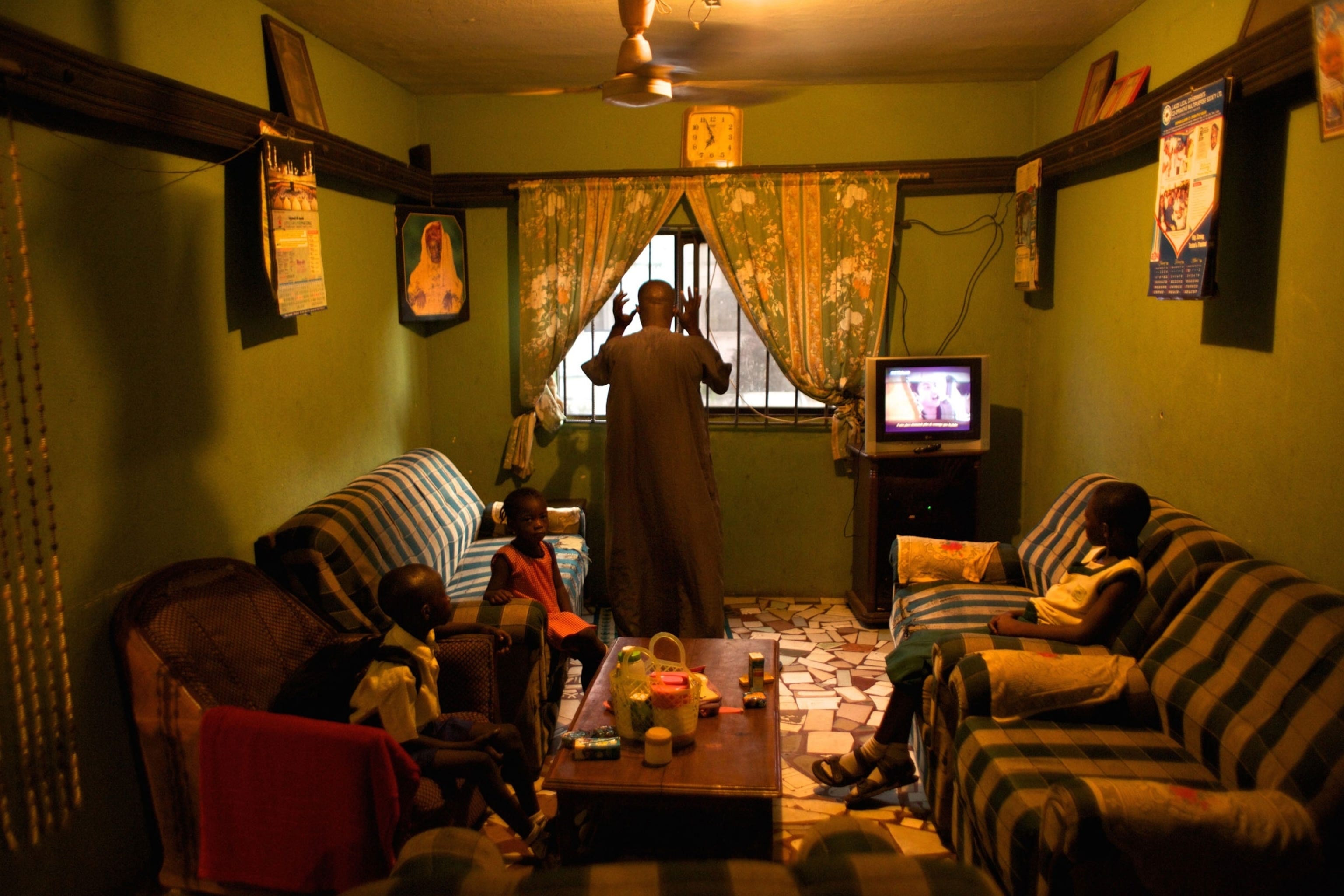
Take a household with a combined income of ₦300,000 a month, a banking officer and a small caterer, the kind of pairing that shows up constantly in Lagos and Ibadan alike. On paper that looks comfortable. In practice, school fees for two children, generator fuel, prepaid electricity, and the steady stream of family obligations can consume most of it before a single discretionary decision gets made. What is left over does not get spent randomly. It gets allocated with real judgment: perhaps the cheaper generic rice but the name-brand school bag, a shared data plan instead of two, a mid-range fabric for a wedding aso-ebi rather than the most expensive lace on offer. None of that is price-blindness and none of it is poverty. It is a household running its own internal cost-benefit analysis, category by category, every single month.
That is not the profile of a market in freefall. That is the profile of a market making constant, deliberate trade-offs that most segmentation models are not built to register, because the models are looking for asset ownership and formal savings, not this kind of granular, category-by-category discernment.
Why Brands Keep Missing Them Anyway
Here is the part that is harder to hear. Even where better segmentation data already exists, most brands still are not building for this tier. That is not a data problem anymore. That is a choice.
Luxury positioning is a glamorous story to tell in a boardroom. Price competition is a simple one to execute. Building for a discerning, income-constrained, trade-off-making middle requires more discipline than either: real product quality at a real price point, communicated without condescension. That is harder work, and it does not photograph as well in a pitch deck.
Go back to the camera. Even once you know the sensor has a blind spot, you still have to choose to adjust the exposure. Most brands know the middle exists by now. They just keep pointing the lens at whichever extreme is easier to shoot.
The largest, most durable consumer base in the country is currently unclaimed, and it is unclaimed by choice.
Counterargument, Honestly
The obvious pushback deserves a straight answer, not a dodge. Maybe this is wishful thinking. Maybe the middle really has been hollowed out as badly as the headlines suggest, and dressing it up as an “invisible opportunity” is just a nicer way of ignoring hard economic reality.
That is a fair challenge, and the honest response is this: even if the middle class is genuinely shrinking, that does not make the measurement problem go away. A shrinking population still needs to be measured accurately to know what is actually left of it, who they are, and what they can still afford. Right now, nobody can answer that with any confidence, because the categories being used were never built to answer it. Undercounting a shrinking market is still undercounting. The size of the opportunity may be smaller than this piece is optimistic about. The blind spot is real either way.
Where This Leaves You
The useful question is no longer “how big is Nigeria’s middle class.” Nobody currently measuring it can answer that with any real confidence, and repeating the number will not fix that.
The useful question is this: whose segmentation model are you actually using, and did you ever check where it came from.
If the answer is a framework built for another market, applied here without translation, that is worth auditing before the next product decision, not after it.
This is Journal 003 in Brands and Markets, a Transformative Experience series on the Nigerian market for investors, business leaders, and builders. Journal 001 looked at why the next wave of Nigerian brand-building is coming from everywhere else. Journal 002 asked why you should invest in Nigeria at all. This one asks who you have been building for, and who you have missed.
The Transformative Experience
Transforming Visions into Legacies.
We work with Nigerian brands, businesses, and individuals to transform vision into legacy by closing the gap between identity and perception. Whether you’re building from scratch or redefining what already exists, every transformation begins with one question:
What do you want people to feel?
The answer shapes the story. We build everything that follows.
Stay close to the conversation.
Follow @tt_xperience on X and Instagram, and subscribe to The Transformative Experience here or on Facebook. You’ll find us there as The Transformative Experience